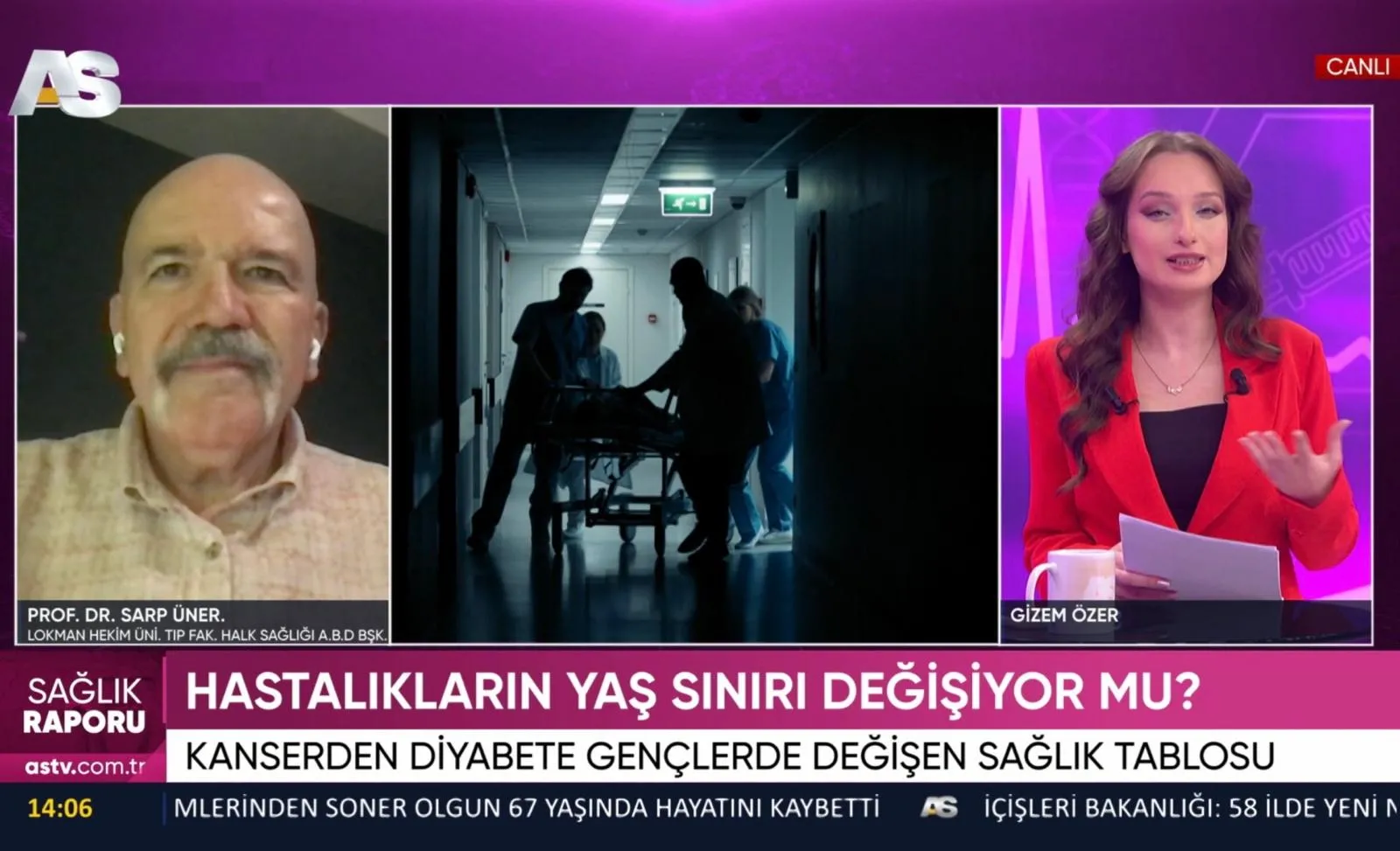
Prof. Dr. Sarp Üner, Chair of the Department of Public Health at the Faculty of Medicine, appeared as a guest on the “Health Report” program—hosted by Gizem Özel and broadcast on ASTV—as part of the university’s mission to serve the community and its social contribution initiatives. During the program, key factors affecting the health of children and adolescents, as well as preventive medicine approaches, were discussed in depth.
Health Monitoring Should Begin in the Prenatal Period
During the broadcast, emphasis was placed on the importance of maintaining regular and uninterrupted health monitoring starting from the prenatal period, rather than at a specific age. Prof. Dr. Sarp Üner, who discussed the effects of maternal health, nutritional habits during pregnancy, secondhand smoke, and environmental exposures on a child’s overall health, stated that the foundations for many chronic conditions that may arise in adulthood can be laid during this early stage.
Childhood Obesity and Metabolic Risks
The program also drew attention to metabolic issues—such as obesity, insulin resistance, type 2 diabetes, and fatty liver disease—whose progression often begins silently and is now observed even in very young children. It was noted that easy access to ultra-processed foods, the pressure of digital advertising, and a sedentary lifestyle negatively impact this situation; it was emphasized that risks identified early on can be managed through healthy eating and physical activity.
The Importance of School Health and Lifestyle Habits
Given that children spend a significant portion of their day at school, the discussion touched on “School Health” and the holistic role of the school environment. It was noted that school health should not be limited to physical conditions alone but must be addressed holistically. The importance of supporting access to healthy foods in school cafeterias and nearby food outlets, increasing physical activity areas that encourage an active lifestyle, and fostering habits of regular sleep and balanced screen time was emphasized.
At Lokman Hekim University’s Faculty of Medicine, our efforts focused on public health education and social contribution—aimed at protecting public health and raising health awareness among the general public—continue with determination.