Tarih: 17.03.2026
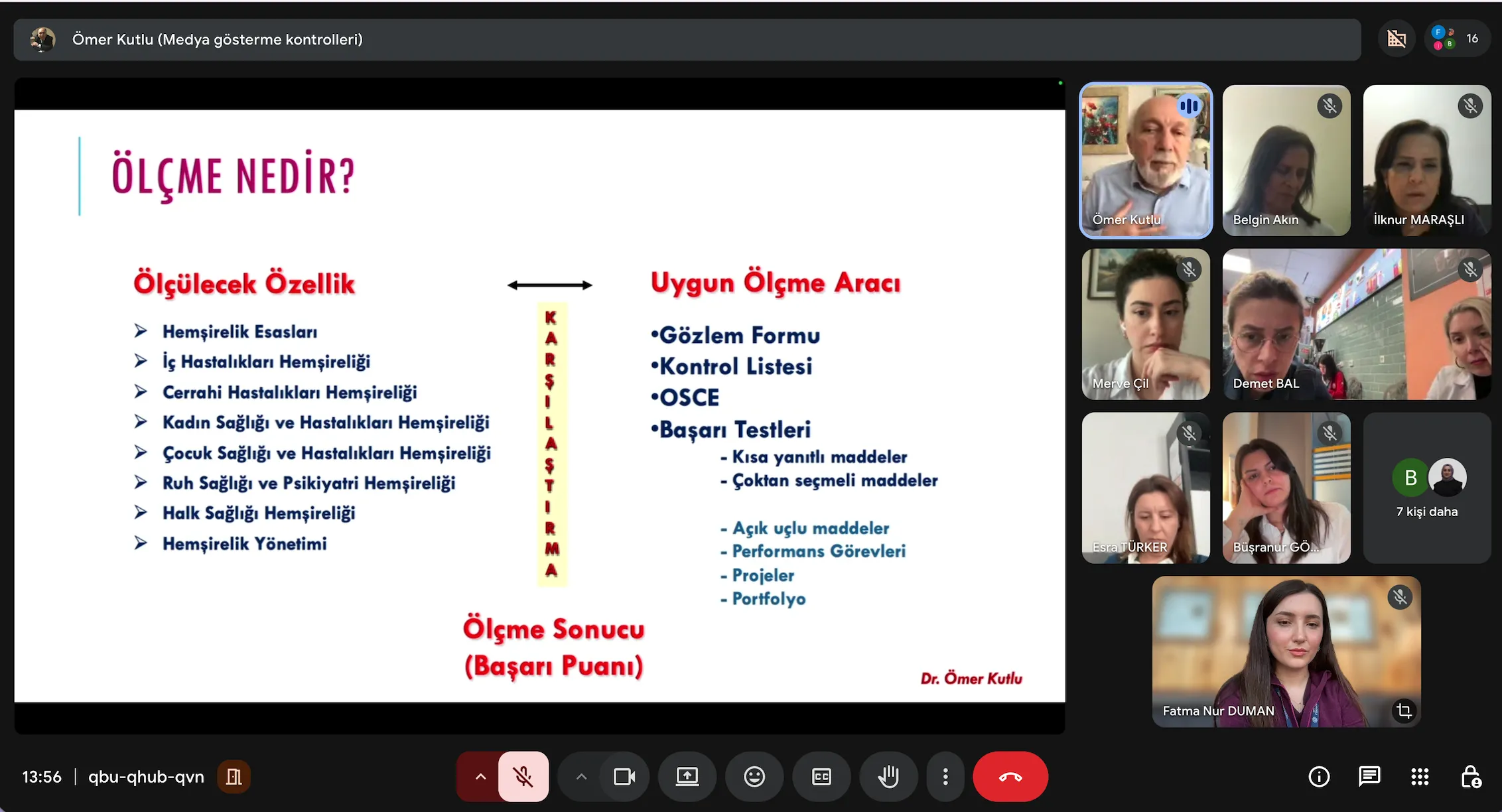
Hemşirelik Bölümü öğretim elemanlarımızın akademik gelişimine katkı sunmak ve ölçme-değerlendirme süreçlerindeki niteliği artırmak amacıyla Ölçme ve Değerlendirme Komisyonu tarafından düzenlenen “Açık Uçlu Sorularda Ölçme ve Değerlendirme Teknikleri” eğitimi, Ankara Üniversitesi Eğitim Bilimleri Fakültesi'nden emekli öğretim üyesi Dr. Ömer Kutlu’nun katılımıyla gerçekleştirildi.
Tüm öğretim elemanlarımızın yoğun ilgi gösterdiği eğitimde Dr. Kutlu, ilk aşamada nitelikli açık uçlu soru yazım teknikleri ve kapsamlı yanıt anahtarı oluşturmanın püf noktalarını paylaştı. Eğitimin ikinci bölümünde ise Hemşirelik Fakültesi bünyesinde uygulanan sınav soruları üzerinden interaktif bir çalışma yapıldı. Eğitim kapsamında, mevcut soruların düzenlenmesi ve yanıt anahtarlarının standardize edilmesi süreçleri örneklerle ele alındı. Ayrıca, sınav sonuçlarının bilimsel verilerle analiz edilmesini sağlayan soruların ayırt edicilik indeksi, madde zorluk indeksi hesaplama formülleri aktarıldı.
Eğitim, katılımcıların sorularının yanıtlanması ve değerlendirme süreçlerinin iyileştirilmesine yönelik karşılıklı görüş alışverişi ile sona erdi.